
Deed Types Recorded in Burke County
Every Burke County deed starts as an instrument. It is entered in the real-estate books of the Clerk of Superior Court. The document names the parties, gives the recording date, and describes the land. It also carries a reference so any later researcher can pull the same page. A deed records a conveyance. But its legal effect rests on the deed language and the whole title history. In Georgia, mortgages usually take the form of security deeds. Liens, easements, plats, court orders, and releases round out the larger land-record trail.
| Deed Type | What It Does | Common Use |
|---|---|---|
| Warranty deed | Conveys land with stated title promises | Ordinary purchase and sale |
| Quitclaim deed | Transfers only the interest the grantor may hold | Family transfers and title cleanup |
| Limited or corrective deed | Limits warranties or corrects a prior instrument | Special transactions and recorded corrections |
| Trustee or trust-related deed | Conveys property through a trust role | Trust administration |
| Tax sale or sheriff's deed | Documents a transfer tied to an enforced sale | Tax sales or sheriff's sales |
The GSCCCA instrument chart lists the full range. It covers security deeds, assignments, cancellations, satisfactions, timber deeds, right-of-way deeds, powers of attorney, court orders, and easements. A security deed does not hand the lender fee ownership. Georgia indexing standards generally put the borrower or owner in the grantor slot. The lender sits in the grantee slot. Later assignments and cancellations can explain what happened to the loan. They never change who took title under the purchase deed itself.
Burke Deed Search Fields
The GSCCCA real-estate name search serves as the online index layer for Burke County deeds. Individuals go in last name first. Run separate searches for business suffixes, middle initials, spouse names, estate wording, and trust variants. Pick Burke County when you want a local chain. Add date filters only after a broad name search returns too many hits.
| Search field | Use | Practical note |
|---|---|---|
| Search Name | Grantor, grantee, or entity | Enter individuals last name, first name |
| Party Type | Separates transfer roles | Check both sides when reconstructing a chain |
| Instrument Type | Narrows deeds, liens, or releases | Do not filter too early |
| County | Limits results to Burke | Neighboring-county display is optional |
| Date Range | Limits the recording period | Uses two mm/dd/yyyy fields |
| Display Controls | Changes page size and layout | Does not change the underlying record |
The portal also provides a book and page search and a subdivision, unit, block, and lot search. Both routes work well once a deed, plat, or legal notice hands you an exact key. Treat the online index as a locator. Image access can vary with the county and GSCCCA account level. The official GSCCCA name-search screen displays the filters you can set before running a Burke County deed query.
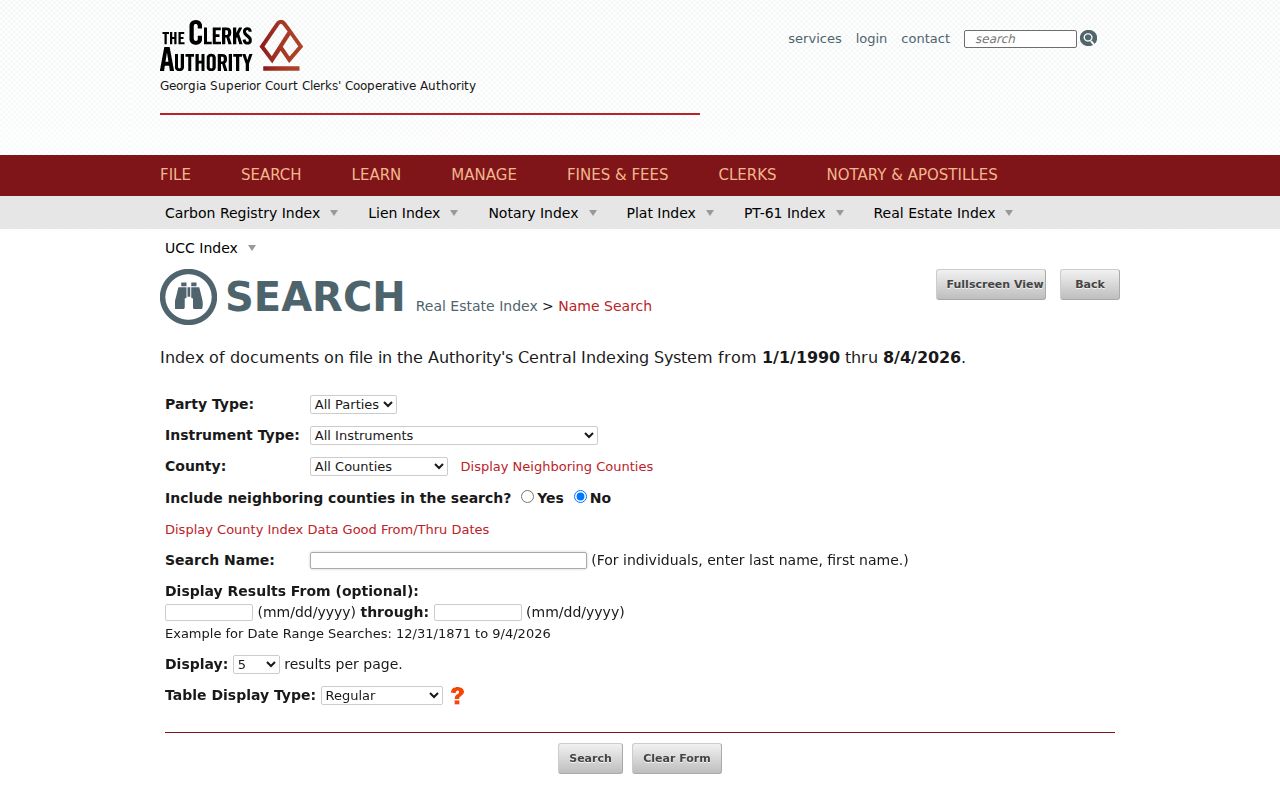
Its county, date, party, and instrument controls let you narrow a chain search without touching the official record itself.
Burke's Online Deed Record Depth
Two official GSCCCA descriptions mark different layers of access. The central-index page shows a range beginning January 1, 1990. A service description names January 1, 1999 as the statewide deed-index milestone. Neither statement promises that every Burke County image is online across the full span. Use the county index good-from and through link. Then confirm the book and image with the clerk.
The distinction matters in a long title chain. A blank result may mean the name was indexed differently, the deed predates the web layer, or the physical book must be consulted. It does not prove the deed never existed. The Burke Clerk's counter at 200 East 6th Street in Waynesboro offers a local terminal and the physical-record fallback. Call 706-554-2279.
Note: Save the exact spelling, date, and reference from each hit before you change a filter or switch systems.
Follow Burke's Grantor-Grantee Chain
A grantor conveys the interest. A grantee receives it. To trace Burke County deed records backward, begin with the newest purchase deed and treat every name and reference as a fresh search key. Names alone will not carry you far. Match the legal description, subdivision, acreage, adjoining owners, and prior deed citation as the chain moves back through time.
- Find the current owner's acquisition deed with that owner indexed as grantee.
- Read the grantor, deed type, date, book and page, and full legal description.
- Search that grantor as a grantee in an earlier period, then compare the land description.
- Repeat until the index stops, then take the last firm reference to the clerk's deed books and archives.
- Grantor
- The party that transfers the stated interest.
- Grantee
- The party that receives the stated interest.
- Chain of title
- The linked sequence of recorded transfers for the same land.
- Book and page
- A volume-and-page locator for a recorded instrument.
- Instrument number
- Another unique filing reference used to retrieve a document.
Estate transfers can interrupt a simple seller-to-buyer pattern. A will, year's-support order, trustee's deed, administrator's deed, or court order may supply the missing bridge. Check the linked names in probate and court records before calling the chain broken. The former owners page follows the chain deeper into older sources for historical work.
The 1856 Burke Courthouse Fire
Around midnight on January 24, 1856, fire broke out in Burke County's courthouse in Waynesboro. The Georgia Archives courthouse history ranks Burke's record losses among the worst in Georgia. Any chain that stops before the mid-nineteenth century deserves extra scrutiny. No web index can restore a destroyed county book.
Later deeds may recite an older transfer. They may name a plantation, a road, or a creek. Some cite an acreage figure or an adjoining owner. Pair those clues with probate files and historic tax material. Add state headright and land-grant records, plats, and newspaper notices. The result can support a sound history of the tract. Label it a reconstruction, not a certified chain. The fire is a records fact, never a reason to guess.
Book, Plat, and Notice Bridges
The True Citizen archive sometimes turns a place name into a direct path. That path leads straight into Burke deed records. One 2025 Spring Valley notice cites Lot 21, Section 2-E. It names Deed Books 1300 and 1356 and Plat File A-5256. A 2023 Westgate Phase III notice points to Deed Book 170, page 71. It also names Plat A-5722. Treat these dated notices as leads. They are not current ownership findings. Their worth lies in the precise record keys they preserve.
Open the scanned notice. Check each book, page, plat, and legal description against the official index or the clerk's copy. Subdivision names like Plantation, Burkehaven, and Barrett West make good search seeds. They are archival examples, though, not a map of present neighborhood boundaries. The book/page capture shows the direct route. It works once a notice or prior deed supplies both halves of the reference.
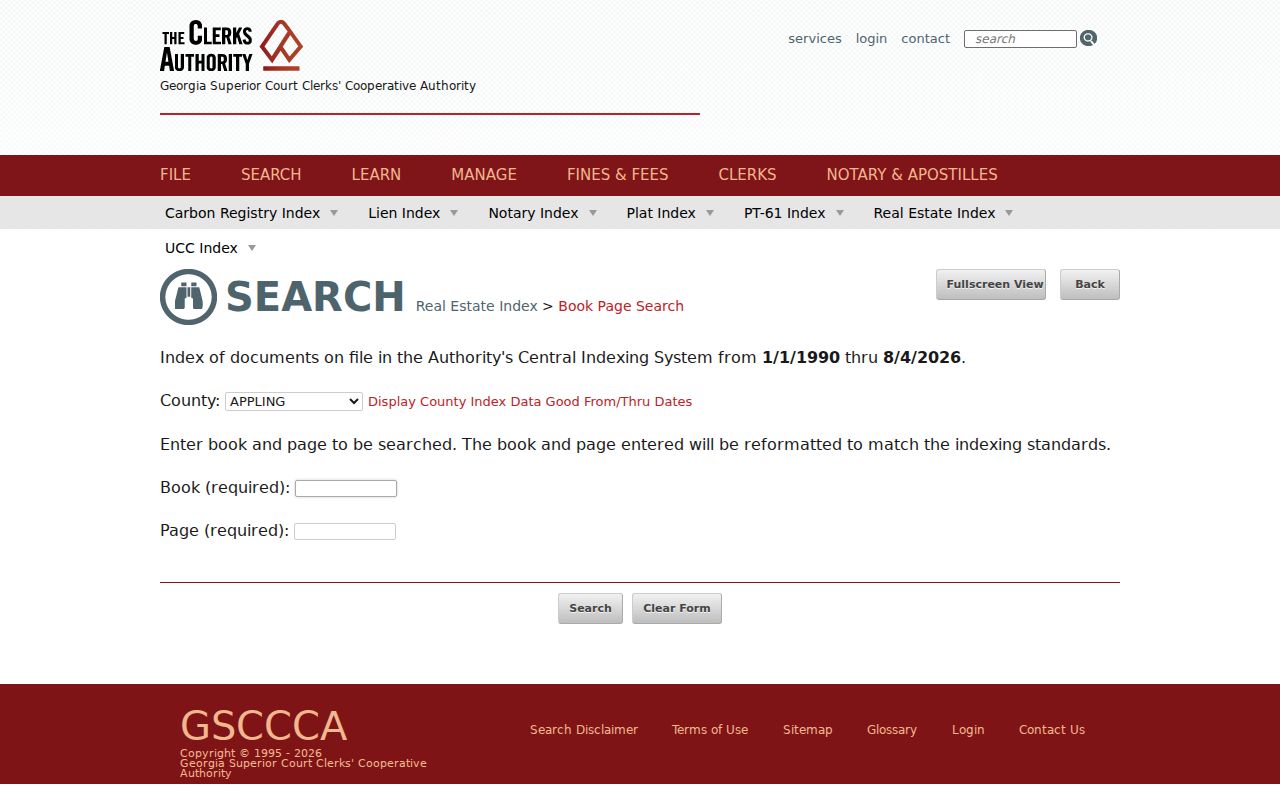
This route is narrower than a name search. It works best after the reference has been checked against the land description. The separate GSCCCA property-search capture uses subdivision terms as record keys instead.
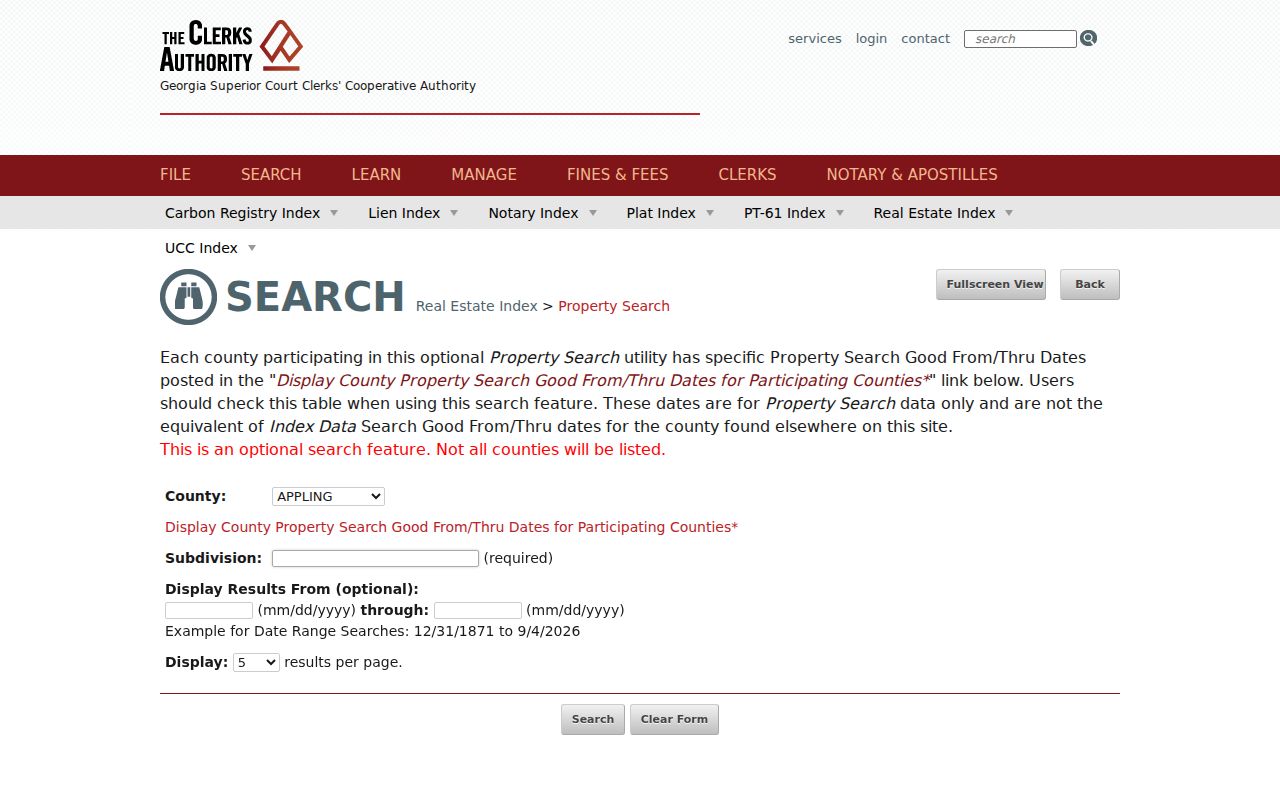
It helps most when a plat or legal notice gives the unit, block, or lot but no dependable street address. Note: A newspaper legal notice can locate a record, but only the recorded instrument supplies the official land-document text.
Security Deeds and Releases
Burke County's land index mixes ownership instruments with encumbrances. Under Georgia indexing practice, a security deed lists the borrower or owner as grantor. The lender appears as grantee. An assignment can move the secured interest to a different lender. A cancellation, release, or satisfaction may show the obligation was cleared. None of these later entries is a new fee-owner deed. Reading them that way leads to wrong conclusions about who holds title.
After locating the purchase deed, search the same party names. Use the SD, ASGN, CANC, and REL instrument categories. Liens, lis pendens, easements, and court orders can also shape the record trail. For unfamiliar codes, the instrument chart at GSCCCA is the safest reference. Still, read the underlying document. A code is only an index label.
Filing Alerts for Burke Property
FANS, the Filing Activity Notification System sends notice of later filings tied to registered names. It looks forward only. FANS does not rebuild old deeds. It cannot certify ownership or promise that every relevant filing will be caught. When an alert arrives, review the actual instrument. Pay nothing to an unfamiliar sender.
GSCCCA's 2025 newsletter reported system changes, account-price updates, and the end of a Historical Indexing Project in June 2025. Those statewide developments argue for checking current access terms and county participation. They set no Burke-specific completion date for historic indexing. The FANS capture shows the separate alert enrollment service for future filing activity.
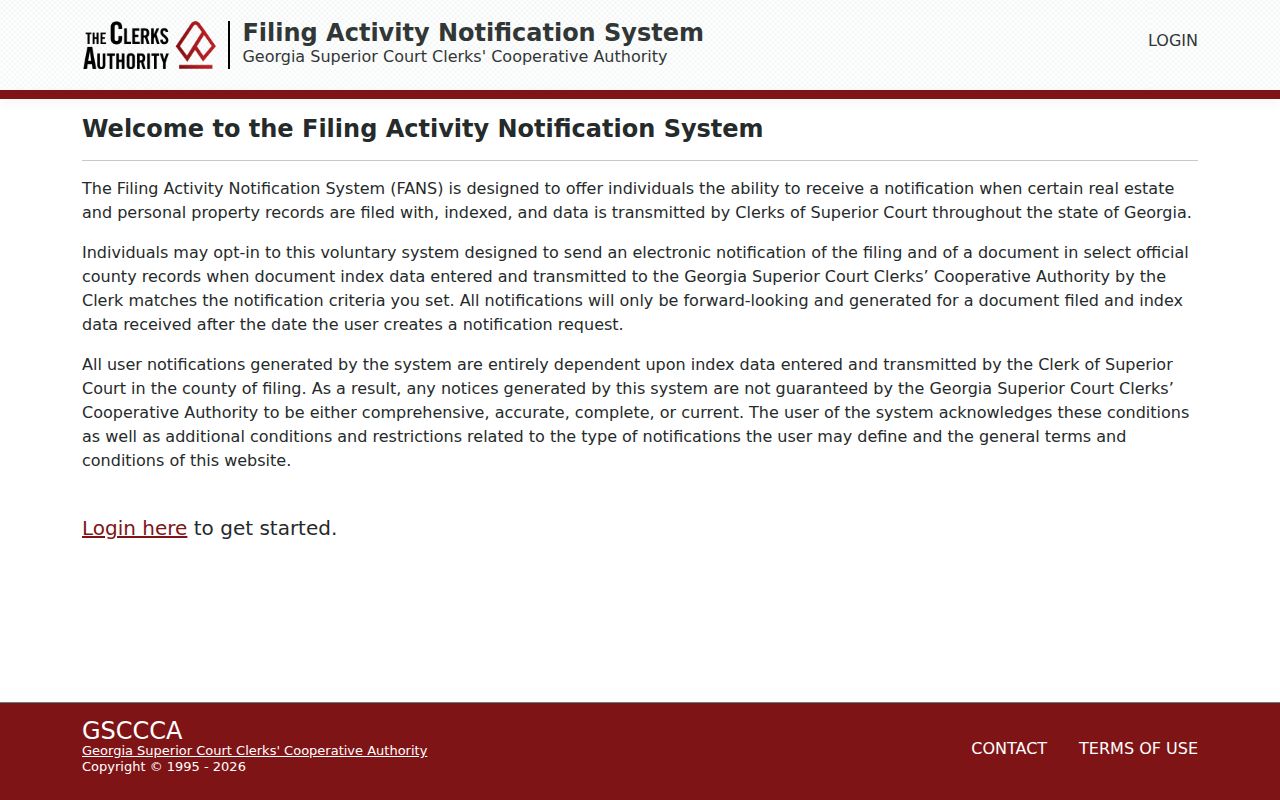
An alert is a prompt to inspect the recorded instrument. It is not proof that a filing is valid or that title changed.
Order a Burke County Deed Copy
Start with the online index. Save the party names, recording date, county, deed type, and the book/page or instrument number. An image may be available under the current GSCCCA access level. It can support early research. A certified copy must come through the authorized clerk or an approved certification route. The GSCCCA eCertification portal serves participating counties as a separate service.
The Burke Clerk takes in-person inquiries at 200 East 6th Street. Mail goes to PO Box 803, Waynesboro, Georgia 30830. Call 706-554-2279 or email clerkofcourtservices@burkecounty-ga.gov. Ask them to confirm the current copy charge, certification method, payment, and delivery. A local schedule dated January 1, 2020 lists $25 to file a deed or other real-estate instrument. The same schedule lists $10 to file a plat or map. Those figures are recording charges. They are not verified current copy prices.
Older material may need a clerk request. The Burke County Archives sits in the former county jail at 403 Old Herndon Road. Another option is Georgia Archives research services. When an estate explains a transfer, FamilySearch's Georgia Probate Records collection can help. It is subject to its account or affiliate-access rules. Confirm archive hours and fees before planning a visit.
Recorded, not guaranteed. Burke County deed records show filed instruments, not a title opinion. Unrecorded interests and indexing gaps can exist, so obtain professional title review when legal ownership must be established.